Why Does the LiftMaster 8550WLB Remote Battery Drain So Quickly?
The LiftMaster 8550WLB is a premium garage door opener renowned for its whisper-quiet belt drive operation and built-in Wi-Fi connectivity. However, one recurring frustration reported by UK homeowners is unexpected remote battery drain. A remote that lasts only weeks instead of months suggests an underlying issue—most commonly a stuck button, radio interference, or a failing capacitor inside the remote itself. This guide breaks down each possible cause, provides a step-by-step troubleshooting approach, and explains when a simple battery swap is not enough.
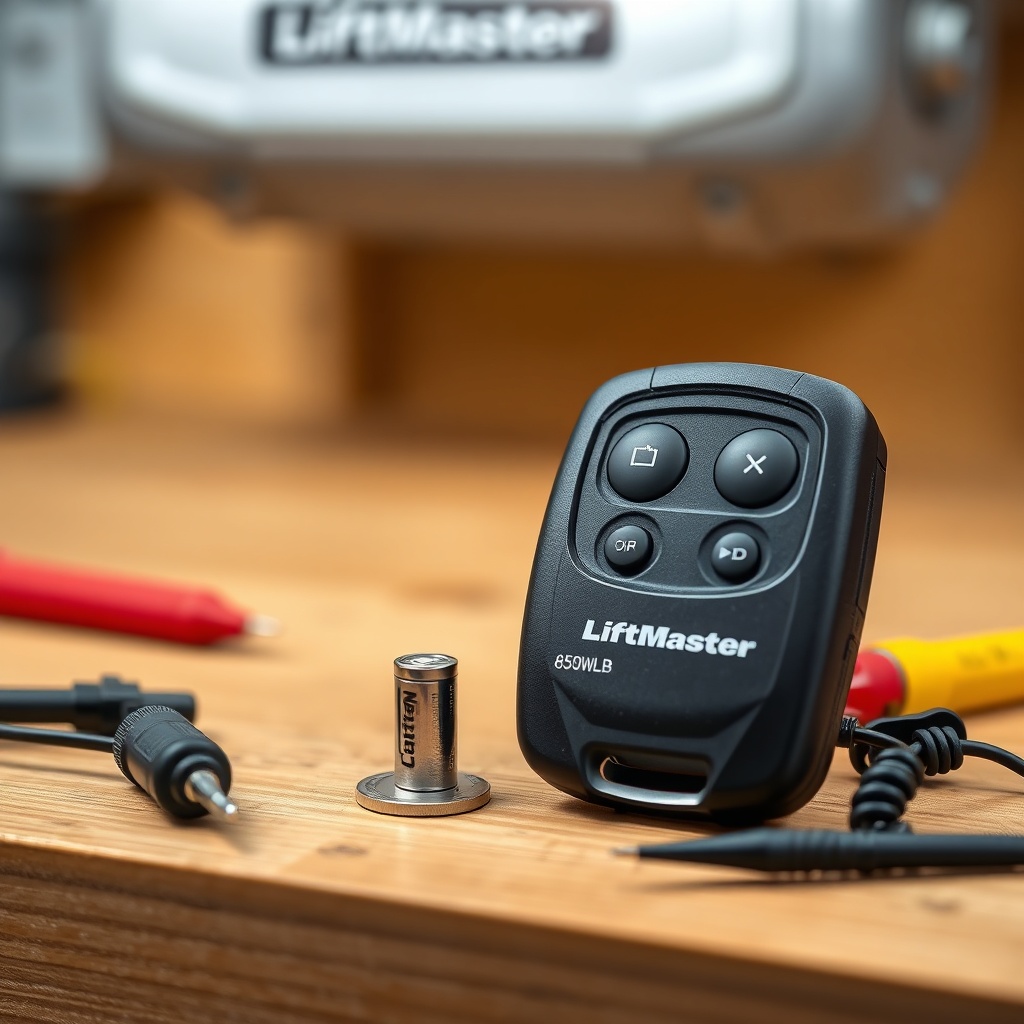
Is a Stuck Button Draining the LiftMaster 8550WLB Remote Battery?
The most frequent cause of accelerated battery drain is a physically stuck or sticky button on the remote. If the button remains partially depressed—often due to dirt, moisture, or a warped casing—the transmitter stays in constant active mode, consuming power 24/7. To test this:
- Step 1: Remove the battery and inspect the button contacts. Use a clean, lint-free cloth to wipe any residue from the button pad and the circuit board.
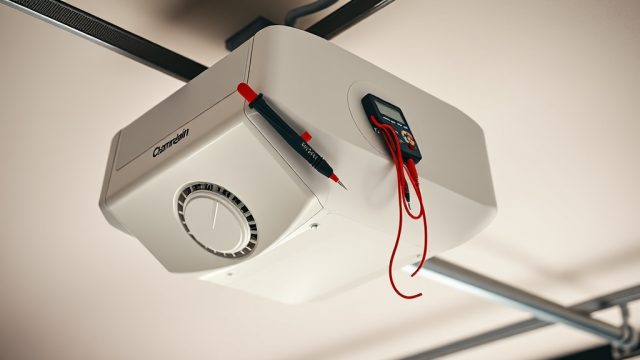
- Step 2: Use a multimeter set to continuity mode to check if the button circuit is closed when no pressure is applied. A closed circuit indicates a stuck switch.
- Step 3: If the button is physically stuck, gently pry it up with a plastic spudger. If moisture corrosion is present, clean with isopropyl alcohol (90%+).
If the issue persists, the remote’s internal membrane may be damaged. In such cases, replacement is more cost-effective than repair—a new LiftMaster 8550WLB remote costs approximately £25 to £40 from authorised UK dealers. For proper programming guidance after replacement, see our LiftMaster 8550WLB Remote Programming: Step-by-Step Guide.
Could Radio Interference Keep the Remote Transmitting Constantly?
Radio frequency (RF) interference from nearby electronics—such as LED bulbs, Wi-Fi routers, or power adapters—can force the opener’s receiver to constantly ping the remote, keeping the remote’s radio module awake and draining the battery. The LiftMaster 8550WLB uses a 315 MHz or 390 MHz frequency, which is susceptible to noise from certain LED bulbs. Symptoms include:
- The remote works intermittently or only from very short range.
- Battery life drops from 12 months to 2-3 months.
- Other garage door remotes in the same household experience similar drain.
To diagnose RF interference, temporarily turn off all LED lights and electronics in the garage. If battery life improves, replace standard LED bulbs with garage-door-rated shielded bulbs (available from DIY stores for around £8-15 each). Additionally, ensure the opener’s antenna wire is hanging straight down and is not touching any metal parts. If interference persists, relocating the opener’s receiver or installing a professional installation RF filter may be required.
What Are the Common Error Codes Linked to Remote Battery Issues?
The LiftMaster 8550WLB displays diagnostic error codes via the Learn button LED. Although these codes primarily point to motor or sensor faults, some relate to communication problems that can drain the remote battery. The table below lists the most relevant codes:
| Error Code | Learn LED Flashes | Meaning | Severity Rating | Action Required |
|---|---|---|---|---|
| 1-5 | 1 flash, 5-second pause | Motor RPM sensor fault | High | Check motor capacitor; see LiftMaster 8550WLB Opener Motor Capacitor Testing: DIY Tutorial |
| 2-1 | 2 flashes, 1 long flash | Wireless receiver board fault | Medium | Inspect antenna, replace receiver board if needed |
| 4-1 | 4 flashes, 1 long flash | Travel module communication error | Low (can affect battery) | Adjust limit switches; see LiftMaster 8550WLB Limit Switch Adjustment: Precise Calibration Guide |
| 5-2 | 5 flashes, 2 long flashes | Battery backup interference | Medium | Replace backup battery; check for corrosion |
If you observe any of these patterns, address the root cause immediately. A faulty receiver board (code 2‑1) can cause the remote to remain in constant pairing mode, draining its battery within days.
How Does a Failing Capacitor in the Opener Drain the Remote Battery?
A less obvious cause of remote battery drain is a failing capacitor in the opener’s motor control board. The LiftMaster 8550WLB uses a capacitor to start and run the motor, but when this capacitor degrades, it can cause the circuit board to remain partially powered even when the opener is idle. This residual power keeps the RF receiver more sensitive, which in turn keeps the remote’s transmitter in a high-power listening state.
Symptoms of a capacitor issue include:
- The garage door opener hums but does not move.
- The opener works intermittently.
- The remote battery drains within 1–2 weeks.
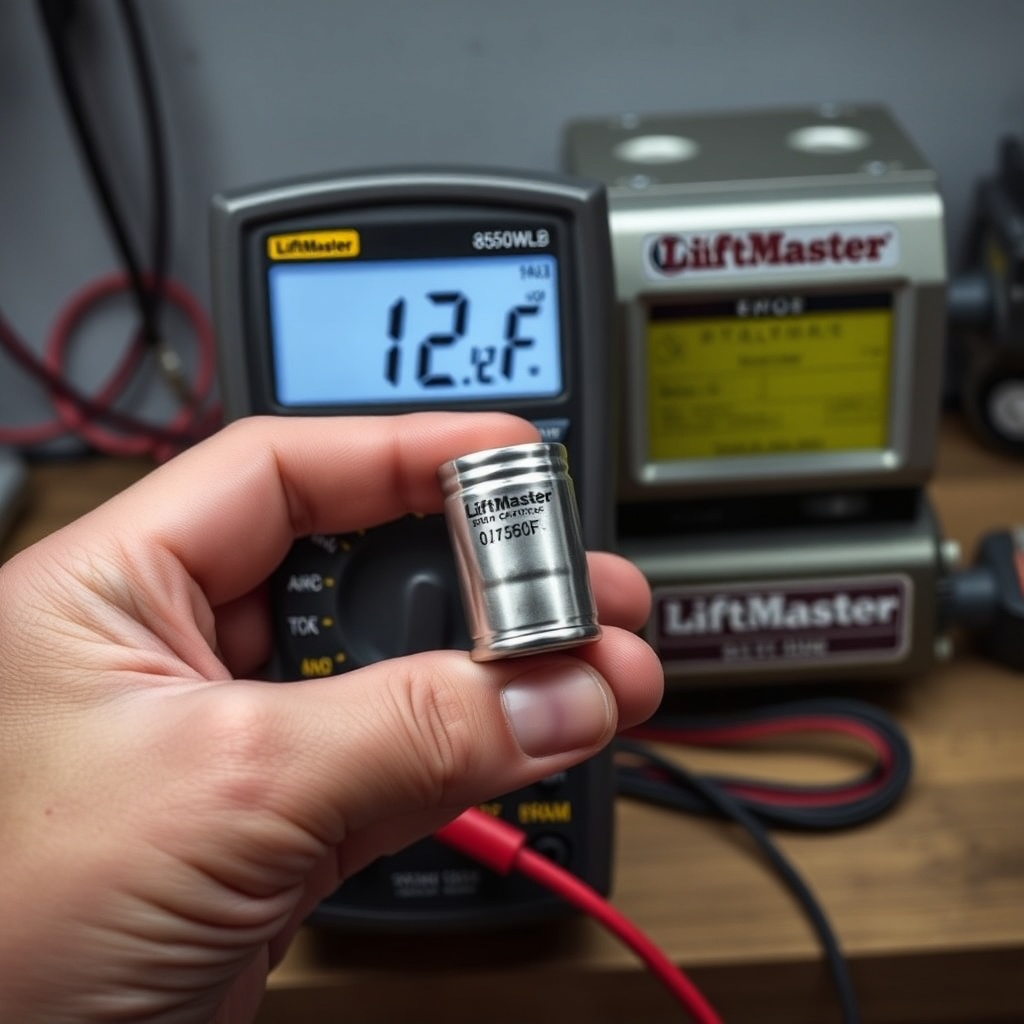
Testing the motor capacitor requires a multimeter with capacitance measurement. Disconnect the opener from mains power, remove the capacitor (typically a black or grey cylinder near the motor), and discharge it safely. The capacitance should be within ±5% of the value printed on the side (usually 10–30 µF). If it reads below spec, replace the capacitor (£6-12 from electrical suppliers like RS Components or Screwfix).
Is the Backup Battery System Causing Remote Drain?
The LiftMaster 8550WLB includes a built-in battery backup that allows operation during power cuts. If the backup battery is old or damaged, it may cause the circuit board to draw extra current, which can also trigger the remote to transmit more frequently as a security handshake. This is especially common in UK homes where the backup battery is left unused for long periods.
- Check the backup battery voltage (should be 24V DC for a sealed lead-acid or lithium-ion unit).
- Replace if the voltage is below 21V or if the battery is more than 3 years old.
- Ensure battery terminals are clean and corrosion-free.
A new backup battery costs between £20 and £45 from authorised dealers. If the drain persists after replacement, consider bypassing the backup temporarily to isolate the issue. For more on maintaining the belt drive mechanism that complements the backup system, refer to our LiftMaster 8550WLB Belt Drive Tension Adjustment: DIY Step-by-Step Guide.
What Owners Say About the LiftMaster 8550WLB Remote Battery Life
Online forums and UK garage door communities frequently praise the LiftMaster 8550WLB for its quiet operation and smart features, but battery life is a mixed bag. Many owners report getting 12–18 months from a single CR2032 or CR2450 coin cell, but a vocal minority—especially those with older units—complain of replacements every 4 months.
One Reddit user from Manchester noted: “After six months, my remote started dying every few weeks. I changed the battery three times before realising one of my LED bulbs in the garage was emitting RF noise. Swapped it to a Philips garage-door bulb, and the remote has been fine for eight months now.” Another owner on a UK DIY forum recommended replacing the remote entirely: “The original LiftMaster remote is great, but the newer ones have better shielding. Cost me £30, and battery life doubled.”
Recurring themes in feedback include:
- Sticky buttons are the top cause among UK users (due to damp garages).
- Radio interference from LED bulbs is the second most common.
- Battery backup systems that are not maintained cause unnecessary drain.
- Many homeowners rely on online programming guides to re-sync remotes after battery replacement.
For those who experience intermittent battery drain alongside erratic door movement, the spring tension can play a role. If the opener struggles to lift the door, it can trigger repeated start commands, taxing the receiver. Check our LiftMaster 8550WLB Spring Tension Measurement: Essential Tool Guide to ensure the door is balanced properly.
Frequently Asked Questions About LiftMaster 8550WLB Remote Battery Drain
- Q: How often should I replace the battery in my LiftMaster 8550WLB remote?
A: Under normal conditions, expect 12–18 months from a single CR2032 battery. If you are replacing it more than every 6 months, investigate the causes listed above. - Q: Will a low battery cause the garage door to stop responding?
A: Yes. When the battery voltage drops below 2.8V, the remote may fail to communicate reliably. Replace the battery immediately. - Q: Can I use a rechargeable battery in the LiftMaster 8550WLB remote?
A: It is not recommended. Rechargeable coin cells typically have lower voltage (3.6V nominal but drop quickly) and may not provide consistent performance. Stick to standard lithium CR2032. - Q: How do I test if the remote is transmitting when not pressed?
A: Use a radio frequency (RF) detector or a simple AM radio tuned to a quiet frequency. Bring the remote near the radio—if you hear static crackle without pressing a button, the remote is stuck transmitting. - Q: Does the LiftMaster 8550WLB remote have a sleep mode?
A: Yes, the remote enters a low-power sleep mode after 30 seconds of inactivity. If battery drain occurs when not in use, the sleep circuit may be faulty—replace the remote. - Q: Can the opener’s logic board cause remote battery drain?
A> Yes, especially if the board has a failing capacitor or a damaged RF receiver. Check error codes as shown in the table above. A professional diagnostic may be required.