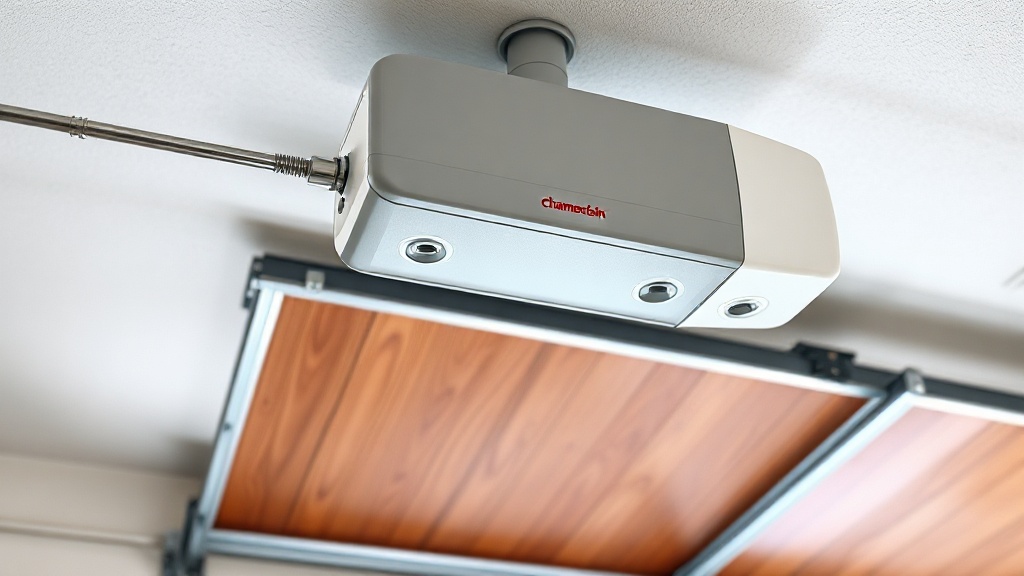
Chamberlain B1381 Spring Tension Calibration: DIY Tutorial
Proper spring tension is the backbone of safe and efficient garage door operation, and the Chamberlain B1381 opener relies on a finely balanced torsion spring system to lift the door with minimal strain. When spring tension is off—either too tight or too loose—the opener motor works harder, components wear faster, and the door may become a safety hazard. This guide walks you through the step-by-step process of calibrating spring tension on a Chamberlain B1381, covering everything from measurement tools to tension adjustment techniques, all while keeping safety as the top priority.
Why Is Spring Tension Calibration Critical for the Chamberlain B1381?
Garage door springs counterbalance the weight of the door, allowing the opener to lift and lower it smoothly. On the Chamberlain B1381, which features a powerful 1.25 HP motor and a belt drive system, incorrect spring tension forces the motor to overcome excessive resistance or rush downward unchecked. This not only shortens the lifespan of the opener but also increases the risk of cable snapping or door derailment. Calibration ensures the door remains in a neutral position when partially open—neither drifting upward nor slamming down—and that the opener operates within its designed torque range.
For a comprehensive overview of the Chamberlain B1381’s safety features, including sensor alignment, see our Chamberlain B1381 Safety Sensor Alignment Guide: Troubleshooting Tips article.
How Do I Check If Spring Tension Needs Adjustment on My Chamberlain B1381?
Diagnosing spring tension issues is straightforward with a few simple tests. Start by disconnecting the opener from the door using the emergency release cord (usually a red handle). Manually lift the door about halfway—if it stays in place without effort, the springs are properly balanced. If the door rises on its own or feels heavy, the springs are too tight. If it falls quickly or feels light, the springs are too loose.
Additional warning signs include:
- Uneven door movement, with one side lagging or jerking.
- Visible gaps or misalignment in the spring coils.
- Excessive noise from the torsion bar area during operation.
- The opener struggles to lift the door, indicated by the motor running longer than usual.
If you encounter any error codes on the Chamberlain B1381’s display, refer to our Chamberlain B1381 Error Code Decoder: Troubleshooting Common Faults article for a full diagnosis.
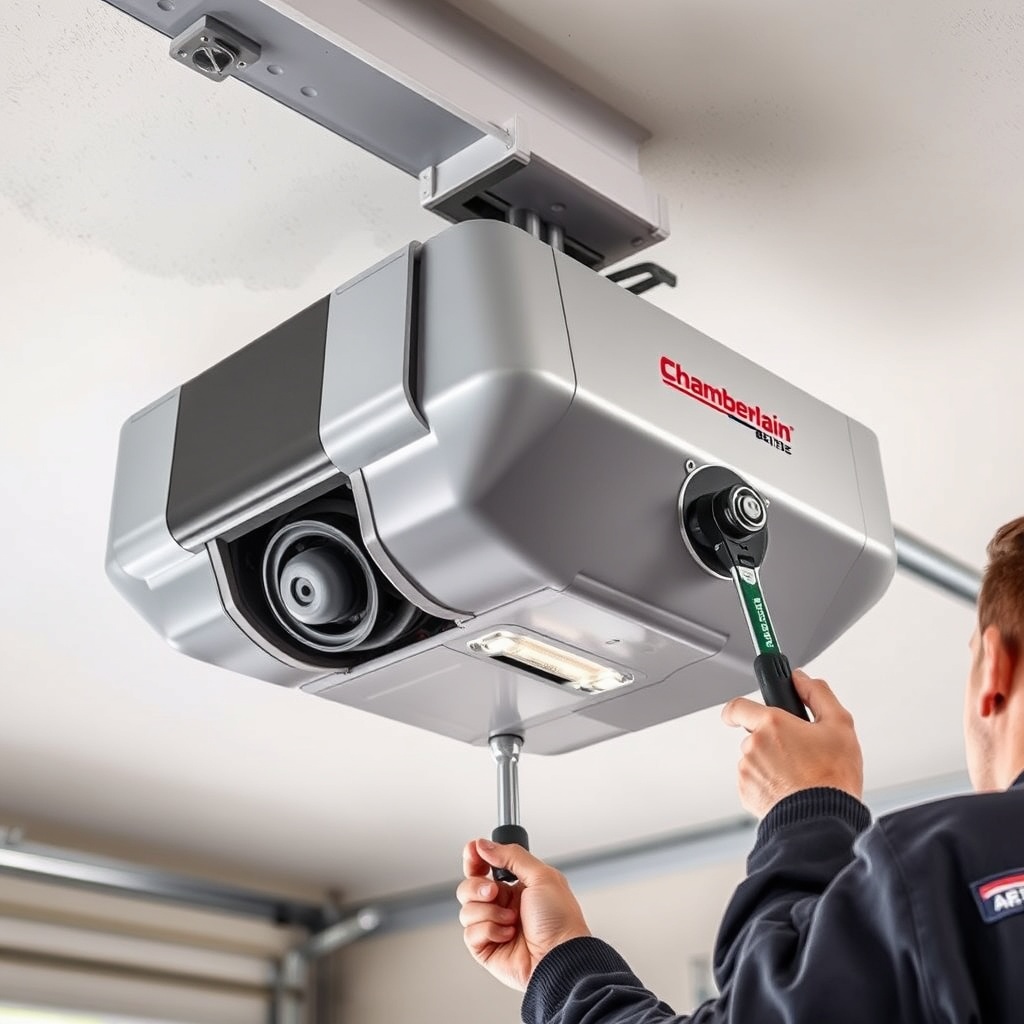
What Tools Are Required for Chamberlain B1381 Spring Tension Calibration?
Spring tension adjustment is not a “eyeball” job—precision tools are essential for both accuracy and safety. You will need the following:
| Tool | Purpose | Estimated Cost (GBP) |
|---|---|---|
| Winding bars (two, 16-18 inch) | Insert into winding cone to tension or loosen springs | £25–£40 |
| Torque wrench (0-50 Nm range) | Measure spring torque for precise calibration | £60–£120 |
| Spirit level (or digital inclinometer) | Check door balance and level | £10–£30 |
| Safety glasses and heavy-duty gloves | Protect against spring snap or cable whip | £15–£25 |
| C-clamps (two, 6-inch) | Lock door in place during work | £10–£20 |
| Ladder (step or extension) | Safe access to torsion bar | £40–£80 |
Never attempt calibration without winding bars—using screwdrivers or pliers is extremely dangerous. Also ensure the Chamberlain B1381 opener is unplugged or the circuit breaker is off during the entire procedure. If you are dealing with component faults beyond tension, our Chamberlain B1381 WiFi Setup Issues: Step-by-Step Solutions Guide can help with electronic troubleshooting.
How Do I Safely Adjust the Spring Tension on a Chamberlain B1381?
Follow this methodical process to adjust torsion spring tension on the Chamberlain B1381 system. The door should be fully closed and secured with C-clamps on both sides of the track to prevent accidental movement.
Step 1: Measure baseline tension. With the door closed and opener disconnected, place a digital force gauge or spring scale on the bottom bracket. Lift the door manually—the required force should be between 7 and 10 kg (15–22 lbs). Anything higher indicates over-tightened springs; lower suggests under-tensioned springs.
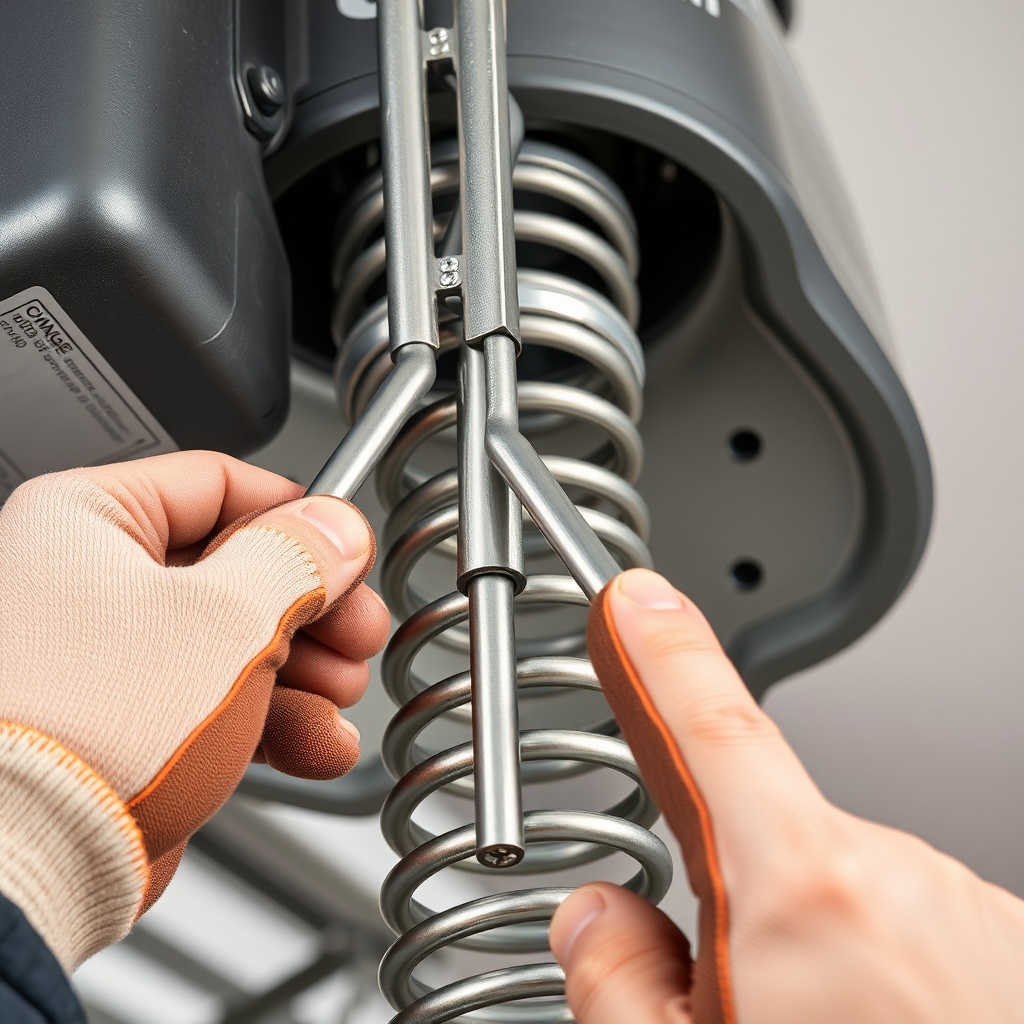
Step 2: Access the winding cone. Using two winding bars, insert one bar into the winding cone (the adjustable collar on the torsion bar). The cone typically has four holes; insert the first bar in the outermost hole for maximum leverage. For most Chamberlain B1381 installations, the left spring winds clockwise (closing direction) and the right spring winds anticlockwise.
Step 3: Loosen or tighten the set screws. Loosen the set screws on the winding cone by turning them anticlockwise using a T-handle hex key (usually 5/16 inch or 8 mm). Do not remove the screws completely—just back them out by three full turns.
Step 4: Adjust tension. To increase tension (if door is too light), rotate the winding bar in the direction that tightens the spring. For example, on a left-side spring, rotate clockwise. Use one bar to hold the cone and the other to push or pull. Make quarter-turn (90°) increments only. Recheck door force after each quarter turn. Typical adjustments require 1–3 quarter turns.
Step 5: Lock and test. Tighten the set screws to manufacturer specification: 15–20 Nm (11–15 ft-lbs). Reconnect the opener and test the door through a full cycle. The door should open fully without hesitation and close without slamming. If the door does not stop or reverses oddly, adjust limit settings first—see our Chamberlain B1381 Limit Switch Adjustment: Precise Calibration Guide.
What Are the Common Risks of Incorrect Spring Tension Calibration?
Mistakes in tension calibration can lead to serious damage or injury. Below is a severity table outlining the potential consequences and their likelihood:
| Symptom | Cause | Risk Severity | Probability |
|---|---|---|---|
| Door slams closed | Springs too loose (under-tensioned) | High – crush injuries, cable snap | Common |
| Door drifts open or lifts slowly | Springs too tight (over-tensioned) | Medium – motor burnout, broken pulley | Occasional |
| Uneven door movement (cocked door) | One spring adjusted incorrectly relative to other | High – door derailment, track damage | Rare |
| Opener error code 1-4 or 4-5 | Torque sensor overload due to spring imbalance | Medium – opener shutdown | Frequent |
If you notice unusual drive noises after calibration, refer to our Chamberlain B1381 Opener Drive Noise Diagnosis: Chain vs Belt article to isolate the source.
What Owners Say About Chamberlain B1381 Spring Tension Calibration
Users on UK garage door forums and review sites frequently discuss the importance of proper spring tension. “I thought my B1381 was underpowered, but it was just the springs—after a single quarter-turn adjustment, the door floated up like magic,” writes one owner from Manchester. Another comments, “I ignored the drifting door for months until one day the cable snapped—cost me £250 in repairs. Now I check tension every spring.”
Common feedback includes appreciation for the detailed manual provided with the Chamberlain B1381, but several owners note that the torsion spring winding steps are not beginner-friendly. “Get a pro if you’re not comfortable with winding bars—springs can kill,” warns a user from Birmingham. On the positive side, owners highlight the opener’s ability to log tension issues through its built-in diagnostics, helping them identify problems early.
Those who have installed the optional safety sensor upgrade find it complements spring calibration perfectly: see our Chamberlain B1381 Ultrasonic Sensor Installation: Enhanced Safety Upgrade for integration tips.
Frequently Asked Questions About Chamberlain B1381 Spring Tension
Q1: Can I adjust spring tension without winding bars?
No. Winding bars are mandatory for safe tension adjustment. Never use screwdrivers, Allen keys, or pliers—they can slip and cause serious injury. Purchase a pair of 16-inch steel winding bars (approx. £30).
Q2: How often should I check spring tension on the Chamberlain B1381?
At least twice per year: once in spring and once in autumn. Also check after any major temperature swing (e.g., after a heatwave or freeze). UK seasons can affect spring mechanics due to metal expansion and contraction.
Q3: What is the correct torque for the winding cone set screws?
Manufacturer specification is 18 Nm (13 ft-lbs) for 3/8-inch bolts. Use a torque wrench to tighten—overtightening can strip the threads. If you lack a torque wrench, tighten firmly but do not use excessive force.
Q4: My door is balanced manually, but the opener still struggles—what’s wrong?
Check the limit switch settings first. If the door is properly balanced but the motor labours, the travel limits may be too tight. Refer to our Chamberlain B1381 Limit Switch Adjustment: Precise Calibration Guide for correct adjustment.
Q5: Will incorrect spring tension void my Chamberlain B1381 warranty?
Yes, if the damage results from improper adjustment. The warranty covers manufacturing defects, not user error. Always document your calibration steps or hire a certified garage door technician if unsure.
Q6: Can I replace a single spring instead of adjusting it?
Only if the spring is visibly damaged (e.g., gap in coils or rust pitting). For minor under/over-tensioning, calibration is sufficient. If one spring is replaced, the other must also be replaced to maintain balance—springs wear as a pair.