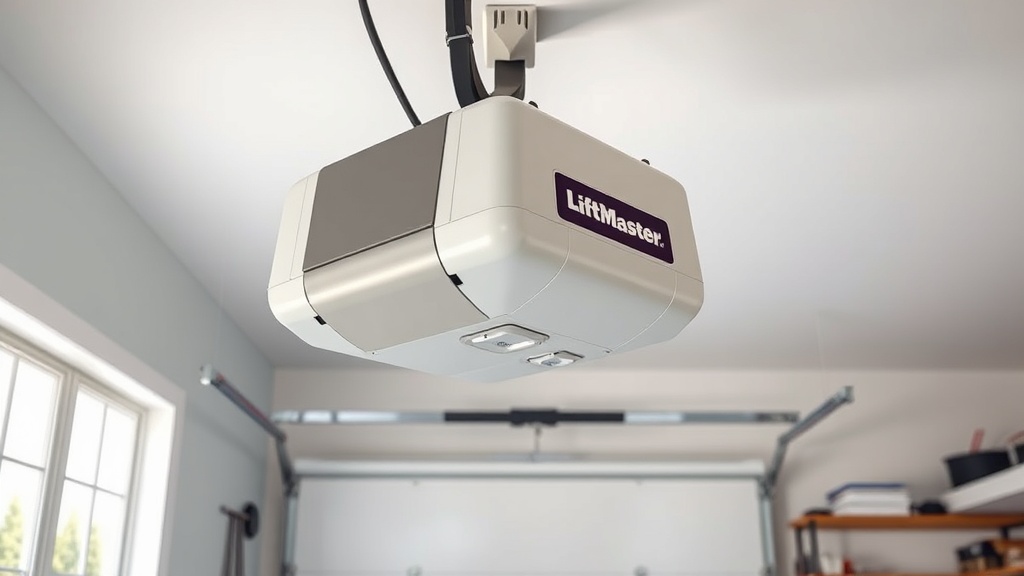
Why the LiftMaster 8550WLB Auto-Reverse Test Is Your First Line of Defense
Every garage door opener, regardless of brand or model, must pass the auto-reverse test to be considered safe. The LiftMaster 8550WLB is a premium belt-drive opener with built-in safety sensors, but even the best equipment can drift out of adjustment. The auto-reverse test checks whether the door will reverse direction if it meets an obstruction while closing – a feature that prevents crushing injuries, property damage, and even fatalities. This article walks you through the specific test procedure for the 8550WLB, what the numbers mean, and when you need to call for service.
How Do You Perform the Auto-Reverse Test on a LiftMaster 8550WLB?
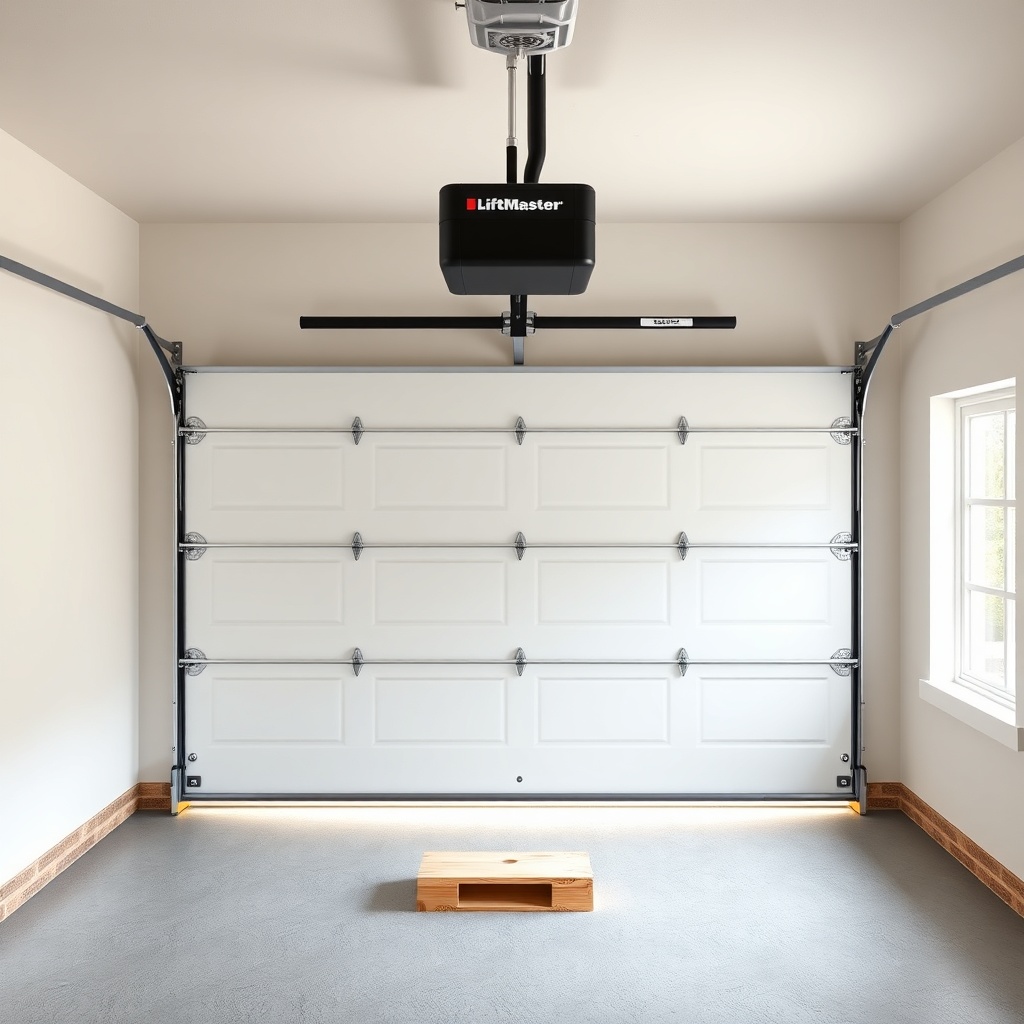
The test is straightforward and should be done monthly. Start with the door fully open. Place a 1.5-inch (40 mm) block of wood – a standard 2×4 cut to that thickness works perfectly – flat on the floor directly under the door’s centerline. Press the wall-mounted close button or the remote to start closing. The door should strike the block and reverse direction within two seconds of contact. If the door stops on the block or continues downward, the auto-reverse system needs adjustment or repair.
For the LiftMaster 8550WLB, the reversing sensitivity is controlled by the force adjustment settings on the opener’s motor unit. If the test fails, do not assume the sensors are at fault; check the force settings first. Always unplug the opener before making any physical adjustments to the limit or force screws.
Repeat the test at least three times to ensure consistency. If the door reverses every time, your system is working correctly. If it fails even once, proceed to the troubleshooting steps below.
What Are the Recommended Force Settings for the LiftMaster 8550WLB?
Force settings determine how much resistance the opener will tolerate before reversing. The LiftMaster 8550WLB uses two adjustment screws on the back of the motor unit: one for closing force and one for opening force. The factory default settings are usually sufficient for a balanced door, but after installation or when the door’s weight changes (e.g., after adding insulation), you may need to fine-tune them.
To check current settings, look for the small plastic cover on the rear panel. Underneath are two screws: the left screw (labeled “Close Force”) and the right screw (labeled “Open Force”). Turn the close force screw clockwise only in quarter-turn increments to increase force, counterclockwise to decrease. A good rule of thumb: set the close force just high enough that the door moves smoothly without hesitation, but low enough that it reverses when meeting a 1.5-inch obstruction.
A common mistake is cranking the force too high to compensate for a tight door. This can disable the safety reverse function. Always verify with the block test after each adjustment. If you need more than three full turns from the factory position, your door likely has a mechanical issue (sticky rollers, binding tracks) that should be addressed first. Refer to the LiftMaster 8550WLB Opener Drive Troubleshooting: Chain vs Belt Issues article if you suspect drive-train binding.
Why Are the Photo Eyes Critical to the LiftMaster 8550WLB Auto-Reverse?
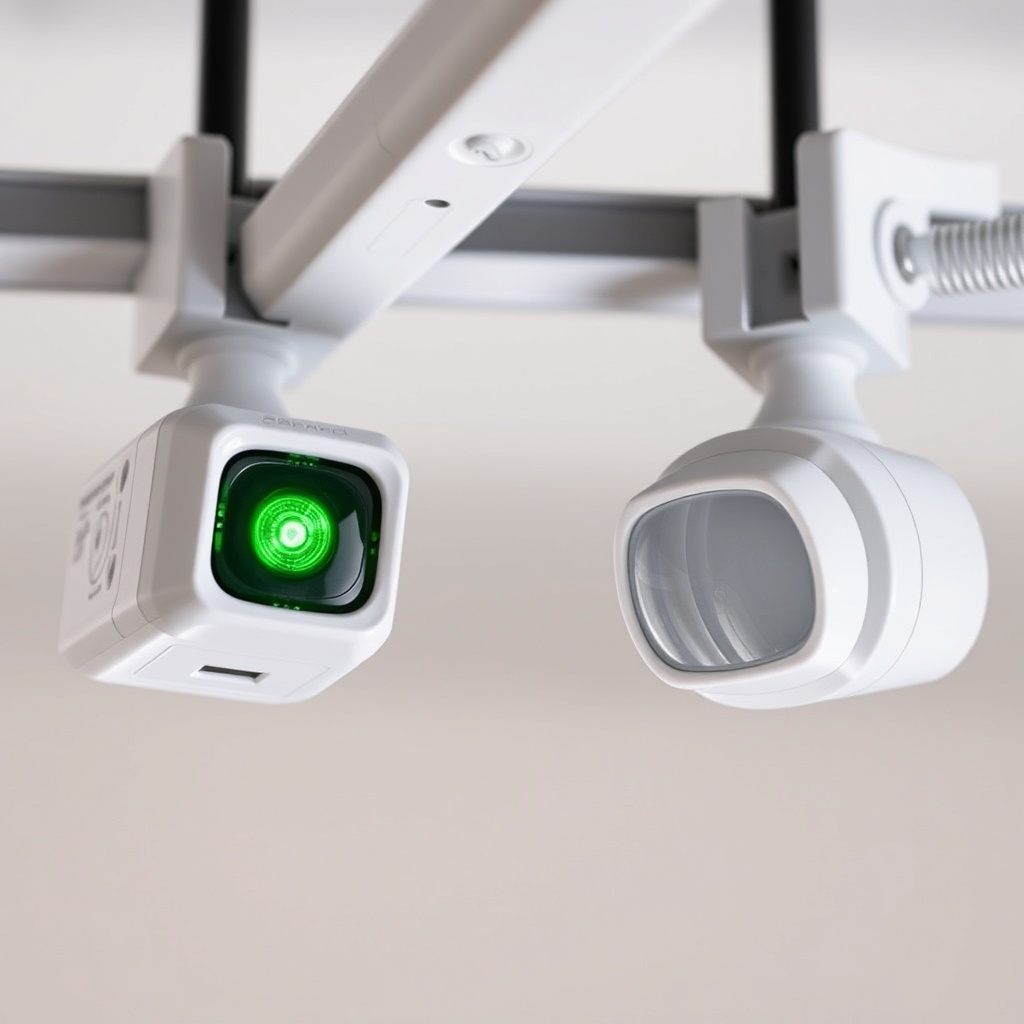
The safety photo eyes – two small sensors mounted on each side of the door rails – are the primary obstruction detection system for the LiftMaster 8550WLB. They emit an invisible infrared beam across the door opening. If the beam is broken while the door is closing, the opener reverses immediately, even before the door makes contact. This is especially important for detecting pets, children, or low-lying objects that a 1.5-inch block test might miss.
To verify the photo eyes are working, perform the “hand wave” test: start the door closing, then wave your hand in front of one sensor so you break the beam. The door should stop and reverse within one second. If it doesn’t, check for these common issues:
- Alignment: Both sensors must face each other directly. If one is knocked out of alignment (common after bumping into a rail), the LED indicator on the receiving sensor will blink or remain off. Adjust the sensor bracket gently until the LED glows steady green.
- Dirt or debris: A dirty lens can block the beam. Wipe both sensors with a clean, dry microfiber cloth.
- Wiring: Loose or corroded wires at the sensor or the opener terminal can cause intermittent failure. Check connections inside the motor unit.
If the sensors are clean, aligned, and wired correctly but the door still doesn’t reverse on beam break, the opener’s logic board may need replacement. A qualified technician can diagnose this with a multimeter.
What Is the Severity of a Failed Auto-Reverse Test?
Not all failures are equally urgent. Below is a severity reference table to help you decide when to act immediately and when you have a bit of time.
| Symptom Observed During Test | Severity Level | Action Required |
|---|---|---|
| Door does not reverse on contacting the block | Immediate attention required | Stop using the opener. Adjust force settings. If problem persists, call a professional. |
| Door reverses only on the block but not on beam break | Needs attention soon | Check photo-eye alignment and wiring. Can continue limited use if door is supervised. |
| Door reverses consistently on both tests | Usually not urgent | Maintain monthly tests. No action needed. |
| Door reverses on block but takes longer than 2 seconds | Needs attention soon | Adjust close force downward slightly. Re-test until reversal happens within 2 seconds. |
| Door stops on block without reversing | Immediate attention required | Unplug opener. Do not use until auto-reverse is properly set. Call a technician. |
If your situation falls into the “immediate attention” category, do not attempt to disable the safety feature. A malfunctioning auto-reverse has been linked to serious injuries, including fatalities. The LiftMaster 8550WLB Troubleshooting Guide: Fix 10 Common Issues may help you identify the root cause, but when safety is compromised, professional service is the safest route.
How Often Should You Replace the Safety Sensors on a LiftMaster 8550WLB?
The photo eyes on the LiftMaster 8550WLB are designed to last the lifetime of the opener, which is typically 10 to 15 years. However, physical damage, corrosion, or a lightning strike can shorten that lifespan. There is no scheduled replacement interval – just test monthly. Replace the sensors only if they fail the beam-break test after cleaning and re-alignment, or if the LED shows a misalignment error that you cannot correct.
When replacement is needed, use genuine LiftMaster sensors (model 041A7305-1) for plug-and-play compatibility. Generic sensors often have different wiring colours or resistances that can cause erratic behaviour. Installation involves mounting the new sensors on the track brackets, splicing the wires (or using push-in connectors), and re-testing. The total cost for a pair of OEM sensors is around £25 to £35. If you’re not confident cutting wires, consider professional installation. For more on physical cable issues, see our LiftMaster 8550WLB Cable Replacement: When and How article.
What Owners Say About the LiftMaster 8550WLB Auto-Reverse System
Real-world user feedback highlights a few recurring themes regarding this particular model’s safety features.
Owner 1: “I’ve had the 8550WLB for three years. The auto-reverse test with the 2×4 is straightforward – it reverses every time. But I did notice that after a power surge, the sensors stopped working. A quick alignment fixed it. I think the plastic brackets are a bit flimsy.”
Owner 2: “My door would close fine, but the reverse test failed. I found the force setting was too high from when I installed it myself. After turning the close force screw down half a turn, it passed. I wish the manual made that clearer.”
Owner 3: “I replaced the cable on my 8550WLB and accidentally knocked one sensor out of alignment. The door wouldn’t close at all until I realigned them. The learning curve is real, but once everything is set, it’s rock solid.” All three owners emphasize monthly testing and keeping sensors clean.
Frequently Asked Questions About the LiftMaster 8550WLB Auto-Reverse
Q1: How do I reset the LiftMaster 8550WLB after the auto-reverse test fails?
A: The opener does not need a reset after a failed test. Simply correct the issue (adjust force settings, realign sensors, or replace wiring) and run the test again. The opener automatically returns to normal operation once the safety circuit is restored.
Q2: Can I bypass the safety sensors on the LiftMaster 8550WLB?
A: Bypassing the sensors is illegal in many jurisdictions and extremely dangerous. The opener’s logic board monitors the sensor circuit, and forcing it to ignore them may result in the door not reversing on obstruction. Never bypass these safety devices.
Q3: Why does my LiftMaster 8550WLB door reverse immediately when closing, even without an obstruction?
A: This is usually caused by misaligned photo eyes or debris on the lenses. If the sensors are clean and aligned, check the limit settings – the close limit may be set too low, causing the door to think it has hit the floor early. Refer to the LiftMaster 8550WLB Troubleshooting Guide: Fix 10 Common Issues for a step-by-step diagnostic.
Q4: What is the correct close force setting for a new LiftMaster 8550WLB installation?
A: Start at the factory default (usually about 1.5 turns from the minimum). Perform the block test. If the door reverses when hitting the block, the force is correct. If it stops or does not contact the block fully, increase the close force by quarter turns until the door reverses within two seconds.
Q5: How long does it take to replace the safety sensors on a LiftMaster 8550WLB?
A: With basic tools (screwdriver, wire strippers, electrical tape), a DIY replacement takes around 30 to 45 minutes. Professional installation is usually faster at 20 minutes. The cost for parts and labour typically runs between £60 and £90 if you hire a technician.
Q6: Does the LiftMaster 8550WLB auto-reverse test work with the battery backup active?
A: Yes, the auto-reverse feature is fully functional on battery power. However, the door will close more slowly when running on backup battery, which may extend the reversal time slightly. Still, it should reverse within two seconds of contacting an obstruction. If it doesn’t, test again when AC power is restored. For installation-related questions, check our LiftMaster 8550WLB Installation Cost and DIY vs Pro Guide.