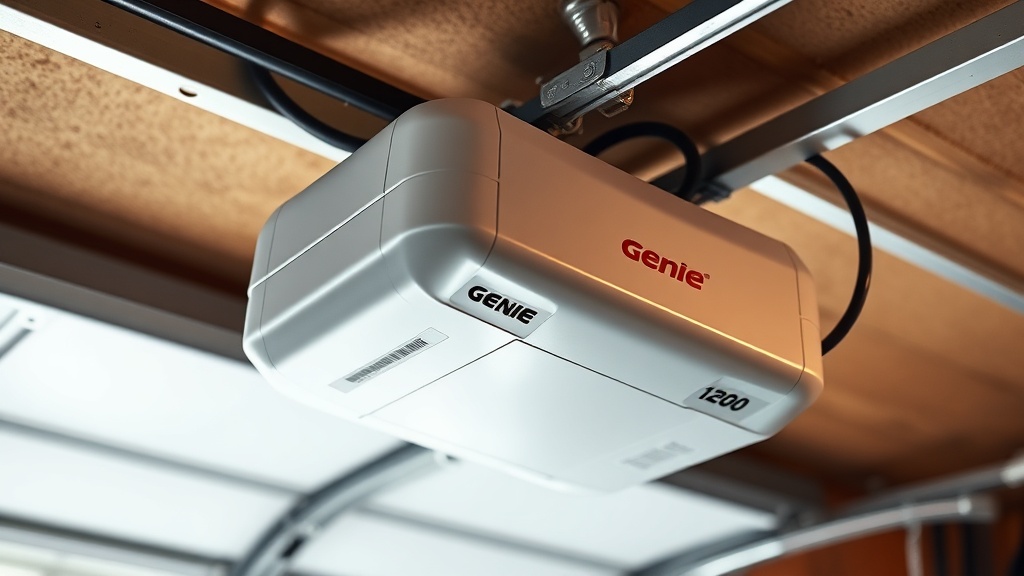
Why Does My Genie SilentMax 1200 Stop Working Mid-Cycle?
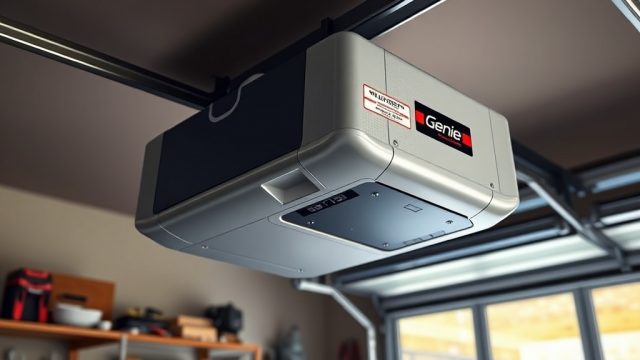
If your Genie SilentMax 1200 garage door opener stops abruptly during operation, the motor capacitor is often the root cause. This small electrical component stores energy to help the motor start and run smoothly. When it fails, the opener may hum but not move, or it may stop partway through opening or closing. This guide focuses on troubleshooting error codes, specifically those related to capacitor failure, and provides a step-by-step replacement procedure for UK owners.
The Genie SilentMax 1200 is known for its quiet belt-drive system and strong DC motor, but like any opener, electrical components wear over time. A faulty capacitor typically triggers error codes like a flashing down arrow or a continuous beeping pattern. Recognizing these signals can save you an expensive service call. For other motor-related issues, see our guide on Genie SilentMax 1200 Motor Noise Diagnosis and Repair.
What Error Codes Indicate a Bad Capacitor on the Genie SilentMax 1200?
The Genie SilentMax 1200 uses LED lights and beeping sequences to communicate faults. A failing motor capacitor commonly produces a single flashing down arrow (or code 1-1) meaning the motor cannot achieve proper torque. In some units, you may see a rapid beeping pattern (three beeps, pause) that points to insufficient starting current. Always check the opener’s control board for a small diagnostic light that flashes in sequences. If you see any of these, and the opener hums but doesn’t move, suspect the capacitor before replacing the entire motor.
| Error Code | Indication | Severity |
|---|---|---|
| Flashing down arrow (1 flash) | Motor torque low / capacitor weak | High – immediate replacement recommended |
| Three beeps repeating | Start capacitor failure | Critical – opener may stop mid-cycle |
| Steady red light on board | Capacitor shorted or open circuit | High – no operation possible |
| Motor hums, no door movement | Capacitor not supplying start-up energy | High – check capacitor first |
These codes are consistent across most SilentMax 1200 models, including the 1250 and 1280 variants. If you also experience Genie SilentMax 1200 Sensor Replacement: Compatible Parts Guide issues, that is a separate problem, but capacitor faults are more common after 3-5 years of use.
How Do I Test the Genie SilentMax 1200 Motor Capacitor?
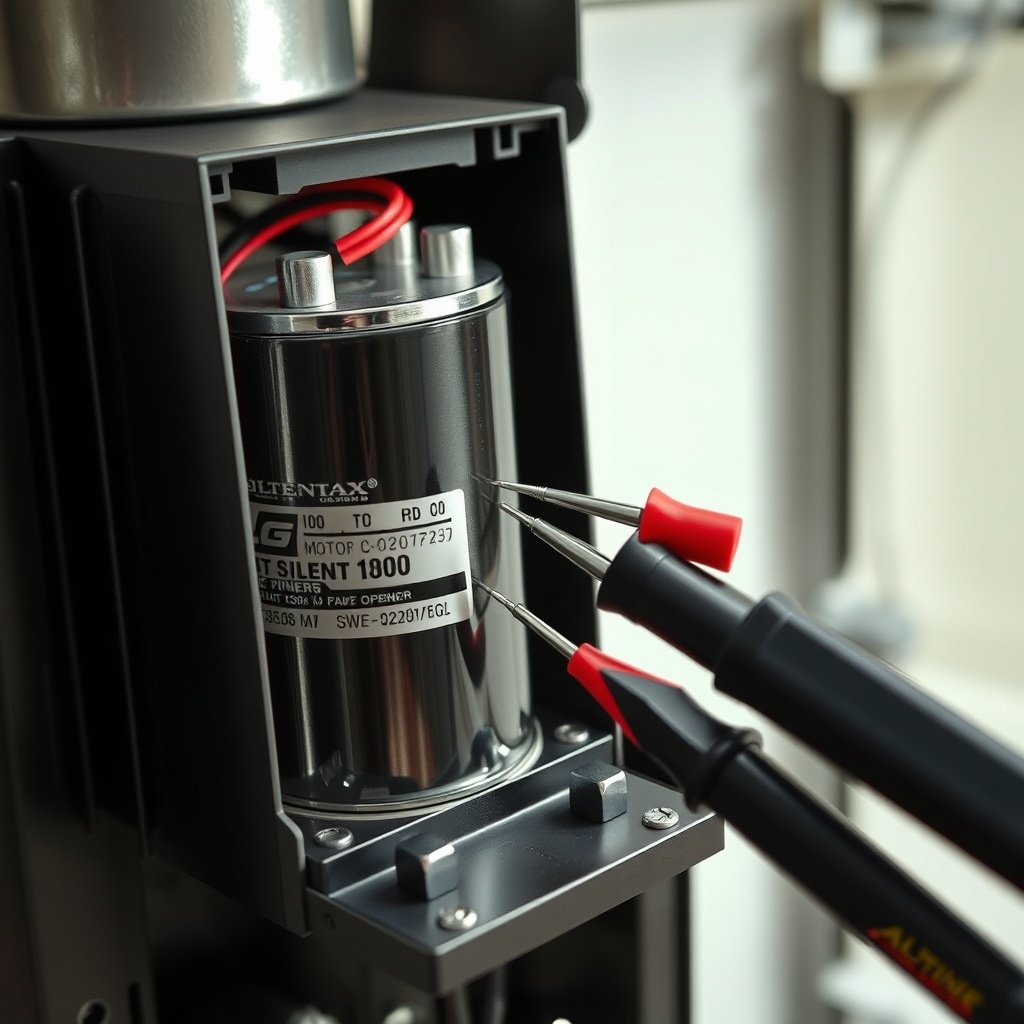
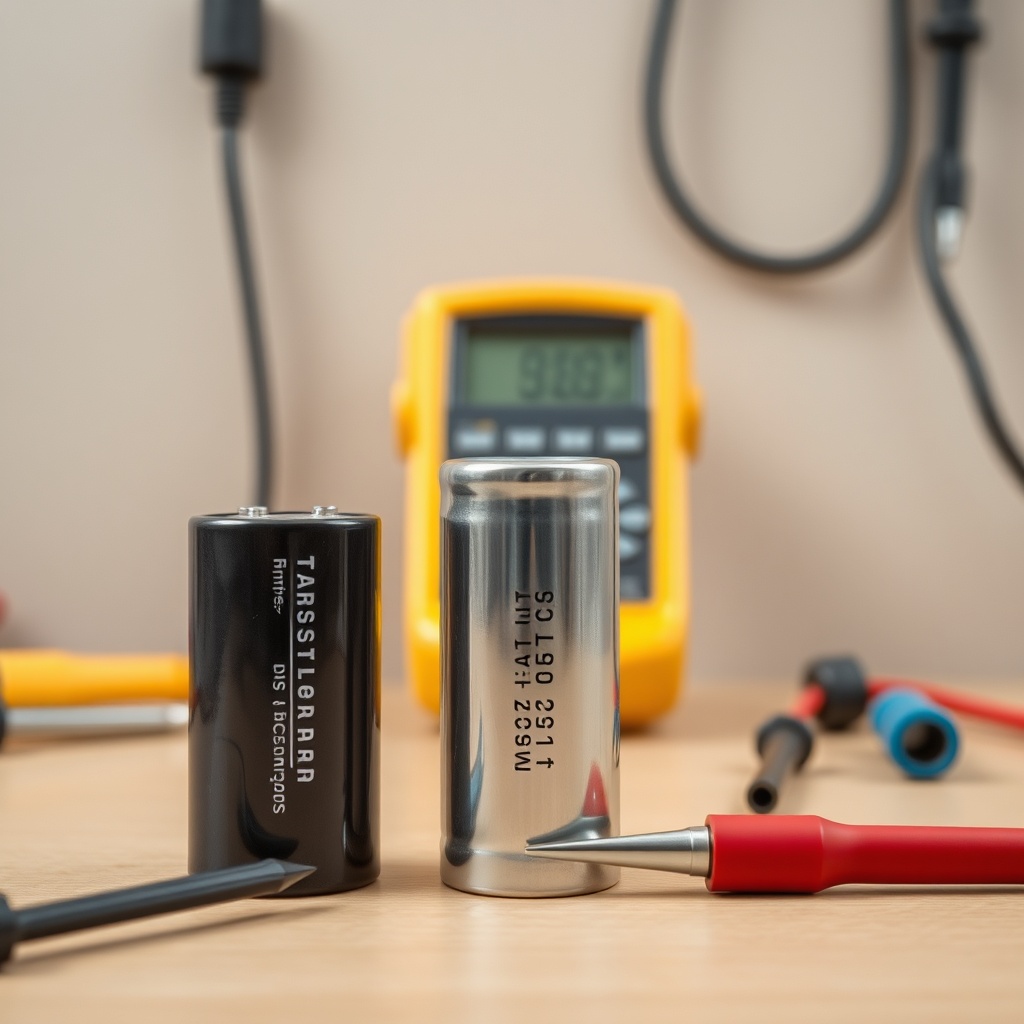
Before buying a replacement, confirm the capacitor is indeed faulty. First, disconnect mains power at the socket (UK standard 230V). Open the top cover of the opener by removing two screws at the back. Locate the capacitor: a cylindrical black or silver component about 2-3 inches long, with two terminals. It sits near the motor. Using a multimeter set to capacitance mode (not resistance), disconnect one wire from a terminal and touch the probes to the terminals. A healthy 30-40 microfarad (µF) capacitor should read within 5% of its rated value—common ratings for the SilentMax 1200 are 30µF or 35µF ±5%. If the reading is zero, very low, or infinite, replace it. Caution: Capacitors store charge. Discharge it safely by shorting the terminals with an insulated screwdriver across a large resistor (like a 10k ohm, 2 watt) for a few seconds.
If the test results are fine, the problem might be in the motor windings or start relay. However, noisy capacitors can also cause intermittent faults. For a deeper dive into motor sounds, refer to Genie SilentMax 1200 Motor Noise Diagnosis and Repair.
What Tools and Parts Do I Need for Capacitor Replacement?
Replacing the motor capacitor on a Genie SilentMax 1200 is straightforward with basic tools. You will need:
- Replacement motor capacitor (30µF or 35µF, 125V AC to 250V AC, typically 150V AC or higher – UK models use 250V AC rated parts). Cost: £8-£18 from electrical suppliers or online.
- Flathead and Phillips screwdrivers (size PH2 for cover screws).
- Needle-nose pliers for wire connections.
- Safety gloves and insulated tools (240V AC system).
- Multimeter (capacitance function) for verification.
Always buy the correct capacitance value – check the old capacitor’s label. Many SilentMax 1200 units use a 30µF ±5% 250V AC WEG or equivalent. Avoid cheap unbranded parts; they may have higher failure rates. For other component replacements, see Genie SilentMax 1200 Battery Backup Installation Guide.
How Do I Replace the Capacitor Step-by-Step?
Follow these steps carefully to replace the capacitor safely:
- Disconnect power: Unplug the opener from the mains or switch off the fused spur.
- Remove cover: Unfasten the two rear screws and lift the top cover off.
- Locate capacitor: Usually attached near the motor with a metal clamp or zip tie.
- Discharge it: Use an insulated screwdriver to bridge the terminals with a 10k ohm resistor, holding for 10 seconds.
- Remove wires: Note which wire goes to which terminal (both are usually the same colour, but label them). Use pliers to disconnect push-on connectors gently.
- Extract old capacitor: Unclip or unscrew the mounting bracket.
- Install new capacitor: Secure it in the same position, reconnect wires in the same orientation (capacitors are non-polarised, but consistent wiring avoids confusion).
- Test before full reassembly: Plug in the opener and press the wall button. The door should operate smoothly.
- Cover back on: Refit the cover and screws.
If the opener still fails, check the Genie SilentMax 1200 Opener Drive Adjustment: Chain Tension and Belt Alignment Guide for tension issues that can mimic a bad capacitor.
What Do Owners Say About Capacitor Issues on the SilentMax 1200?
Many UK owners report that the motor capacitor fails after 2-4 years, especially in garages with frequent temperature changes (like unheated spaces). Owners on forums note that the opener will often make a loud hum, then stop – a classic sign. One user from Manchester said: “Fixed it with a £12 capacitor from Amazon. Took 20 minutes. Saved £150 on a call-out fee.” Another pointed out that cheap capacitors from eBay may fail again within months. Genuine Genie parts or equivalents from brands like WEG or EPCOS are recommended. Some owners also mention that the error code (single down arrow flash) is easy to misinterpret as a motor failure, so testing is important. Overall, the consensus is that the capacitor replacement is a cost-effective DIY job for anyone comfortable with basic electrical work.
Frequently Asked Questions
Q: Can I use any 30µF capacitor for the Genie SilentMax 1200?
A: Ideally use a capacitor rated at 250V AC and the same capacitance (30µF or 35µF as original). Using a lower voltage rating (e.g., 125V) can cause premature failure in a UK 230V system.
Q: How long does the replacement capacitor last?
A: A quality capacitor lasts 5-10 years. Poor-quality ones may fail within a year. WEG or Panasonic are reliable brands.
Q: My opener beeps constantly. Is it always the capacitor?
A: Not always – a constant beep can also indicate a safety sensor misalignment or communication error. Check the sensors first (see Genie SilentMax 1200 Sensor Replacement: Compatible Parts Guide). But if accompanied by a hum, the capacitor is likely the cause.
Q: Do I need to recalibrate the opener after capacitor replacement?
A: No, calibration is not needed for capacitor replacement – it only affects motor start reliability. However, if you also adjust Genie SilentMax 1200 Spring Tension Adjustment: DIY Tutorial, then do recalibrate travel limits.
Q: What if the new capacitor doesn’t fix the issue?
A: Then the problem is likely the motor start relay, worn motor brushes, or a failed control board. Check for voltage at the motor using a multimeter (with power on, but caution). A professional diagnosis may be needed.
Q: Can I test the capacitor without removing it?
A: For accurate measurement, remove one wire from the terminal. In-circuit readings can be influenced by other components like the motor windings, giving false results.
Q: Is capacitor replacement covered under warranty?
A: The Genie SilentMax 1200 typically has a 1-year warranty (UK). If within that period, contact Genie support. After that, it’s a normal wear item.