Introduction
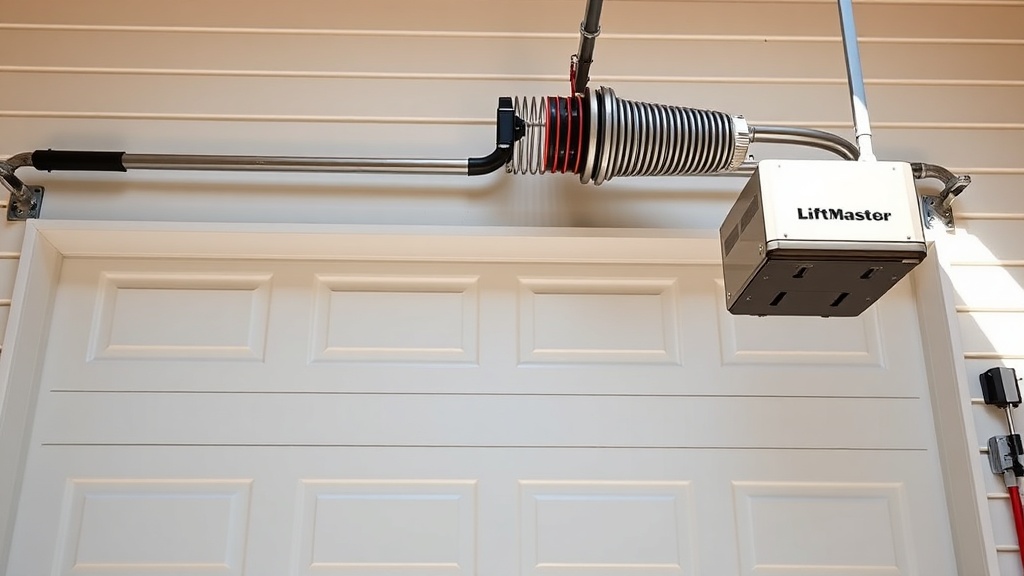
When a LiftMaster 8500 wall‑mount opener is installed, the torsion springs (typically used with sectional doors) or extension springs (often found on older or lighter doors) are critical to the smooth operation of the entire system. The 8500’s jackshaft design places unique demands on spring balance, because the opener relies on a cable‑and‑drum mechanism rather than a traditional rail‑based torsion system. This guide focuses specifically on spring repair, covering the differences between torsion and extension springs, how to diagnose problems, and step‑by‑step safety procedures for LiftMaster 8500 owners.
What Are the Main Differences Between Torsion and Extension Springs for a LiftMaster 8500?
The LiftMaster 8500 is designed to work optimally with torsion springs mounted above the door opening, because the opener’s wall‑mount configuration uses a torsion bar and cable drums that align with side‑mounted cables. Extension springs, which run along horizontal tracks on each side, can still be used with the 8500, but they require additional hardware and careful adjustment to avoid cable misalignment.
| Feature | Torsion Springs | Extension Springs |
|---|---|---|
| Mounting location | Above the door, on a torsion bar | Above the horizontal tracks, on each side |
| Number of springs | Typically one or two (for heavier doors) | Two (one per side) |
| Compatibility with LiftMaster 8500 | Standard, direct connection to cable drums | Requires extension spring conversion kit |
| Force distribution | Concentrated near the torsion bar | Distributed along horizontal tracks |
| Common failure mode | Spring breakage due to fatigue (loud bang) | Cable snap or spring stretching over time |
| Typical replacement cost (GBP) | £120–£250 (installed) | £80–£150 (installed) |
Does the LiftMaster 8500 Require Special Springs?
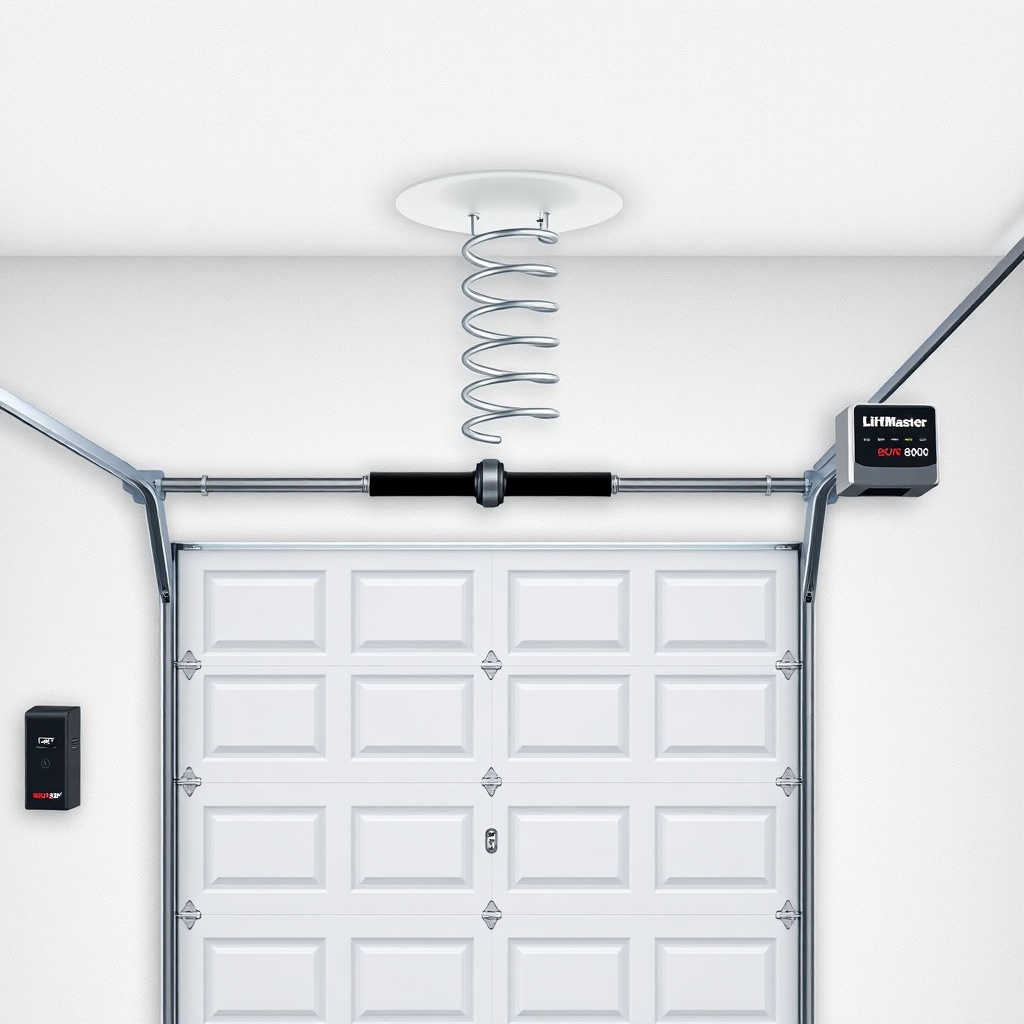
No, the LiftMaster 8500 does not require proprietary springs. However, the spring system must be correctly balanced to match the door weight, because the opener’s wall‑mount design uses cables that wind onto drums. If the springs are mismatched, the cables can overstress, causing premature wear or sudden failure. For torsion spring systems, the spring size (wire diameter, coil length, and inside diameter) must be calculated based on the door’s height, weight, and drum specifications. Extension springs need a conversion bracket that provides a fixed anchor point for the cable loop.
When repairing or replacing springs on a LiftMaster 8500, always use springs rated for the door’s total weight. Many installers recommend torsion springs for doors over 8 feet (2.4 m) tall, as they provide more consistent balance and last longer. The 8500’s motor can compensate for slight imbalances, but severe imbalance will lead to torque overload and overheating – a known issue covered in our LiftMaster 8500 Opener Motor Overheating: Causes and Troubleshooting Guide.
How to Diagnose a Broken Spring on a LiftMaster 8500 System?
A broken spring is one of the most common reasons a garage door becomes inoperable. For torsion springs, a break usually results in a loud bang and the door slamming down or refusing to open. For extension springs, the break is quieter, but the door will appear crooked or stop midway. Here’s how to diagnose the specific issue:
- Visual inspection: With the door closed and the power disconnected from the LiftMaster 8500, look at the springs. Torsion springs may show a visible gap between coils. Extension springs may have a broken loop or stretched section.
- Manual operation test: Disconnect the opener using the manual release cord (red handle). Try to lift the door manually. If it feels extremely heavy or won’t move, a spring is broken. If it lifts but feels unbalanced, the spring may be partially broken or stretched.
- Cable inspection: Check both cables for fraying or kinks. On an 8500 system, the cables are routed from the drum to the bottom bracket. If the spring breaks, the cables can become loose or tangled.
- Listen for noise: A grinding or squeaking sound during operation often indicates a spring or cable issue. The 8500’s motor may strain, triggering error codes.
If you suspect a broken spring, do not attempt to open the door. A broken torsion spring stores immense energy and can cause serious injury. Call a professional. For minor cable issues, see our LiftMaster 8500 Wall-Mount Installation: Space-Saving Tips and Tricks for proper cable routing.
Can I Replace a Torsion Spring on a LiftMaster 8500 Myself?
Replacing a torsion spring on any garage door system is dangerous due to the high tension involved. On a LiftMaster 8500 system, the torsion bar is directly connected to the opener’s drive sprocket, so improper handling can damage the motor or the door. While DIY replacement is possible for experienced homeowners, most garage door specialists recommend hiring a certified technician. The average cost for professional torsion spring replacement in the UK is between £120 and £250, including parts and labour. Extension spring replacement is slightly safer for DIY, but still requires careful measurement and strong tools.
If you are confident and have the proper tools (winding bars, safety glasses, and a spring gauge), follow these general steps:
- Disconnect power to the LiftMaster 8500 and manually release the door.
- Measure the old spring (wire diameter, coil length, inside diameter).
- Secure the torsion bar with a clamp to prevent rotation.
- Insert winding bars into the spring winding cone and unwind the spring slowly, one quarter-turn at a time.
- Remove the broken spring and install the new one, reversing the unwinding process.
- Adjust the balance by winding the spring until the door lifts easily halfway and stays in place.
- Reconnect the LiftMaster 8500 and test the cycle.
Incorrect winding can lead to the spring snapping, causing severe injury. If you are unsure, always err on the side of caution and hire a professional. The 8500’s wall‑mount design makes access to the torsion bar easier than traditional ceiling‑mounted openers, but the risk remains high.
How Do Extension Spring Repairs Differ for the LiftMaster 8500?
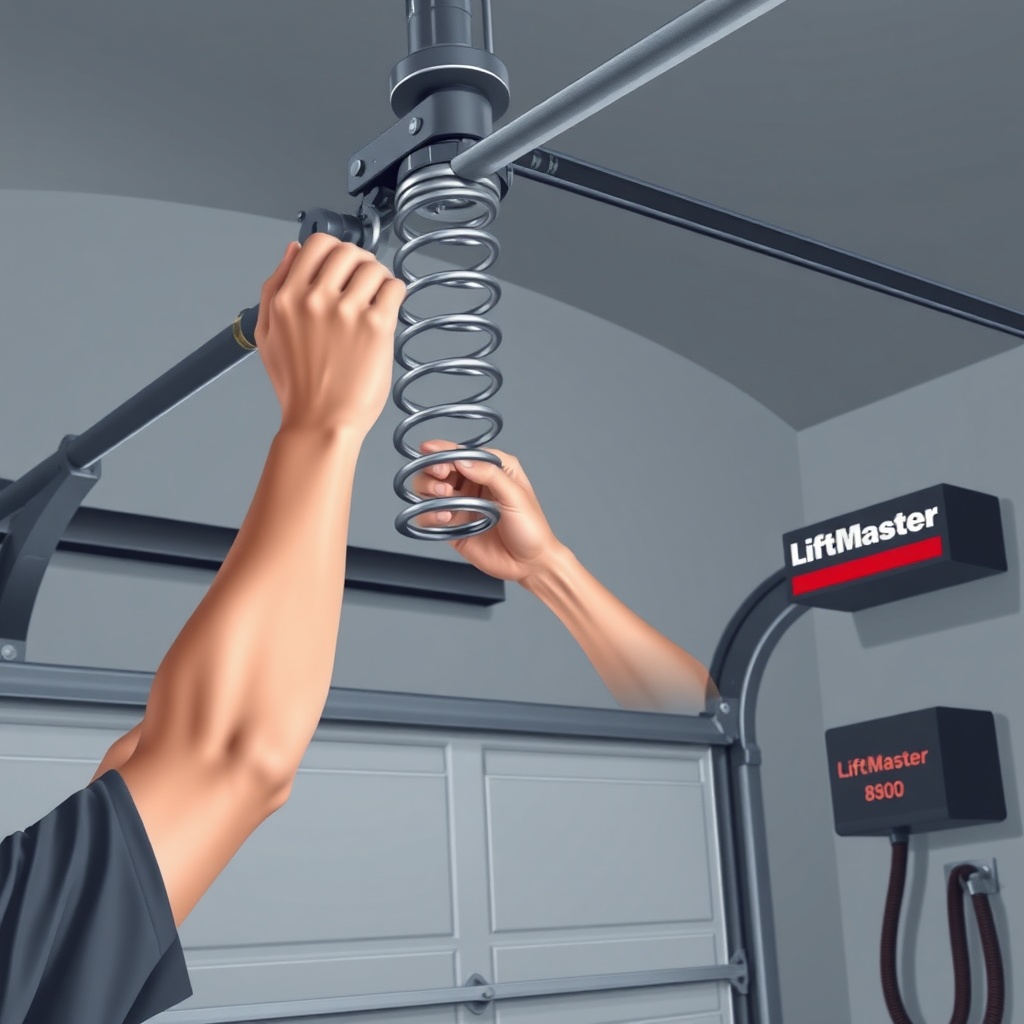
Extension spring repairs on a LiftMaster 8500 require specific attention to cable routing and safety cables. Because the 8500 uses two separate cables that attach to the bottom corners of the door, any imbalance between the left and right springs will cause the door to tilt. Replacement of extension springs involves:
- Relieving tension by opening the door fully and securing it with locking pliers on the tracks.
- Detaching the spring from the S‑hook and the track bracket.
- Installing the new spring with correct orientation (colour coding often indicates spring strength).
- Attaching safety cables through the spring to prevent flying pieces if the spring breaks.
- Testing the balance by manually lifting the door halfway.
Extension springs are generally cheaper (about £80–£150 installed) but have a shorter lifespan (5–7 years) compared to torsion springs (10–15 years). For an 8500 opener, extension springs may require more frequent adjustments because the wall‑mount mechanism amplifies small imbalances. Always replace both extension springs at the same time, even if only one appears worn.
What Owners Say About LiftMaster 8500 Spring Repair
Owners who have dealt with spring issues on their LiftMaster 8500 report mixed experiences. Some appreciate the durability of torsion springs with the 8500, noting that after proper balance, the opener runs smoothly and quietly. Others complain that diagnosing a broken spring is trickier with the wall‑mount system because the cables and drums are less visible than on a traditional screw‑drive setup. One common tip from forums is to lubricate the torsion bar bearings and cable drums annually to reduce stress on the springs. Another is to check the WiFi module for error codes – for connection troubleshooting, see our LiftMaster 8500 WiFi Setup Troubleshooting: Fix Connection Issues. Overall, owners who maintain their springs and cables properly report a lifespan of 12–15 years for torsion springs on the 8500 system.
Frequently Asked Questions
1. How often should I replace the springs on my LiftMaster 8500?
Most torsion springs last 10–15 years with regular use. Extension springs should be replaced every 5–7 years or when you notice uneven door movement.
2. Does a broken spring void the LiftMaster 8500 warranty?
No, but damage caused by operating the opener with a broken spring may not be covered. The warranty covers manufacturing defects, not wear‑and‑tear parts like springs.
3. Can I use extension springs with a LiftMaster 8500 if I add a tension converter?
Yes, an extension spring conversion kit is available that provides a fixed anchor point for the cable loop. This kit is relatively inexpensive (£25–£50) and is required for proper operation.
4. How much does it cost to replace torsion springs on a LiftMaster 8500 in the UK?
Professional replacement typically costs between £120 and £250, including parts and labour. DIY spring kits cost around £40–£80, but safety risks are high.
5. How do I know if my LiftMaster 8500 is trying to lift a broken spring?
The opener will struggle, make a loud grinding noise, and may display error code 1‑5 or 4‑3 on the control panel. The door will not open fully or will slam shut.
6. Is it safe to leave the LiftMaster 8500 connected with a broken spring?
No. Disconnect power to the opener and manually lock the door. Operating the opener with a broken spring can damage the motor and cables, leading to more expensive repairs.