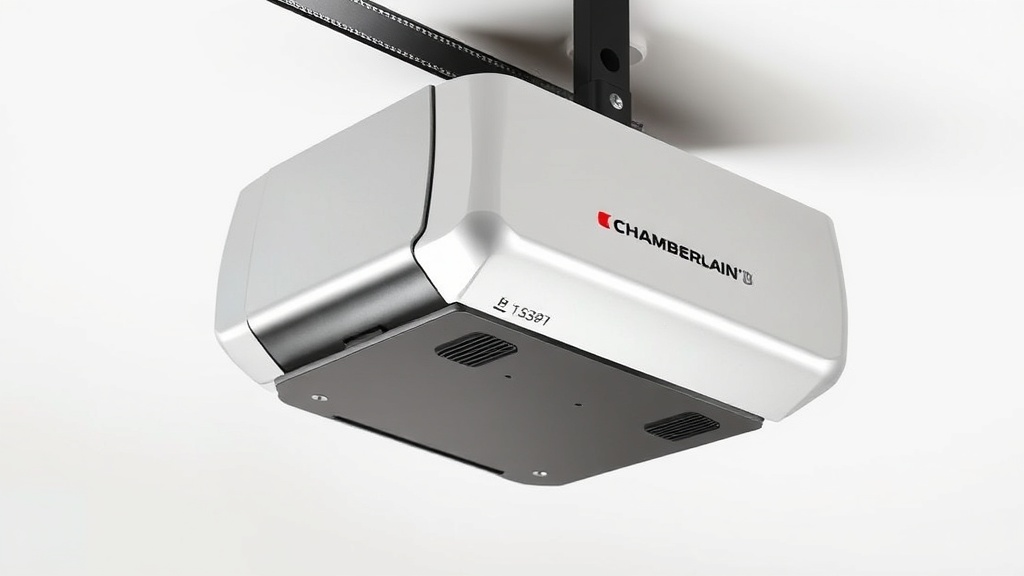
Chamberlain B1381 Motor Replacement: A Practical Guide
When the motor in your Chamberlain B1381 garage door opener starts making grinding noises, fails to lift the door consistently, or simply stops responding to commands, a motor replacement might be the most cost-effective solution. This guide walks through the entire process, from diagnosing a failing motor to installing a new one, with specific torque values, wire gauges, and alignment steps.
How Do I Know If the Motor in My Chamberlain B1381 Needs Replacing?
Not every performance issue means the motor is dead. Start by ruling out simpler problems: check power supply (120V AC at the motor unit terminals), inspect the capacitor (replace if bulging or leaking), and listen for a humming sound without movement—that often points to a bad start capacitor, not the motor itself. If the motor runs but the door moves slowly or stops mid-way, the worm gear or drive sprocket may be stripped rather than the motor being faulty.
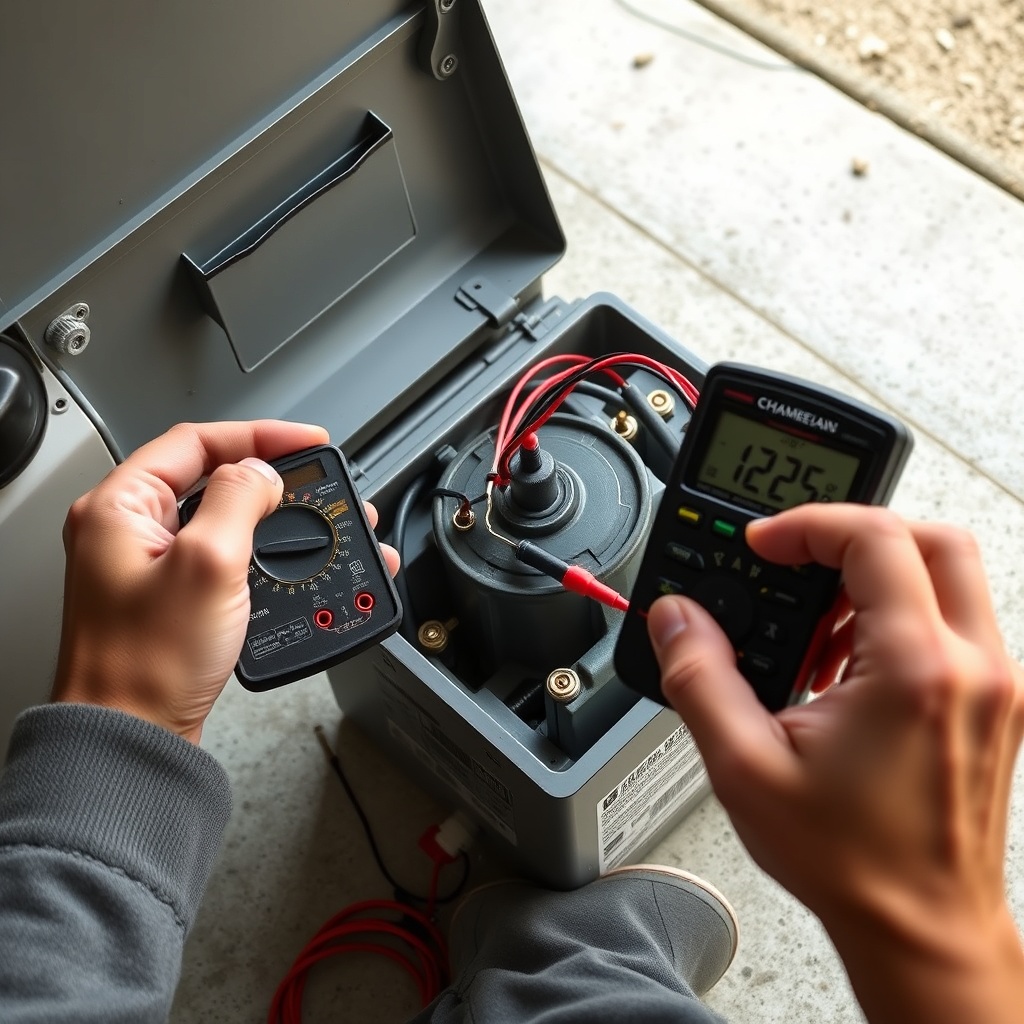
True motor failure in the B1381 typically presents as a complete lack of rotation despite correct voltage at the motor leads (usually 90–120V AC during startup), extreme overheating after just a few cycles, or a burning electrical smell. The B1381 uses a ½ HP DC motor with permanent magnets, so brushes are not replaceable—when the motor fails, it’s a sealed unit swap. Measure resistance across the motor terminals; a healthy motor should read between 0.5 and 2.0 ohms. An open circuit (infinite ohms) confirms a failed winding.
What Tools and Replacement Parts Do I Need for a B1381 Motor Swap?
Before starting, gather these essentials:
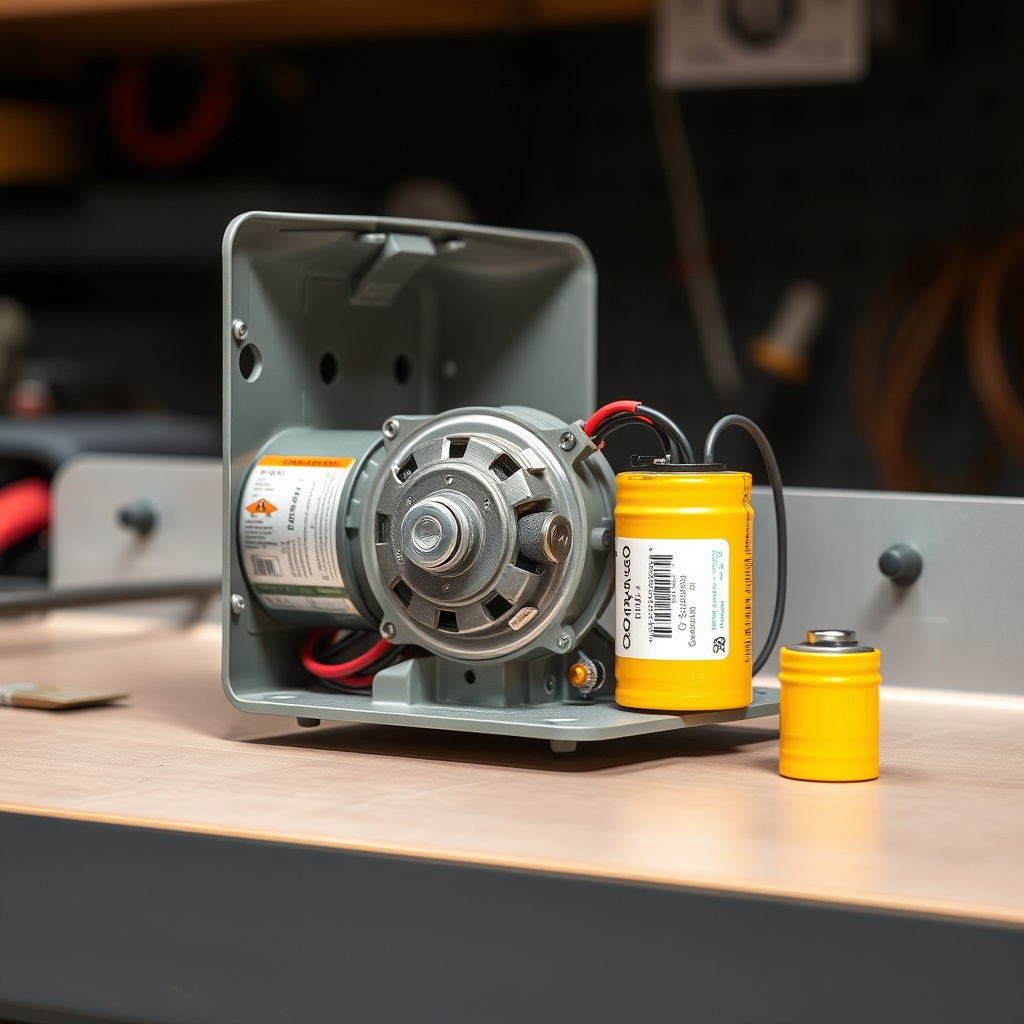
- Replacement motor assembly: Chamberlain part number 041A7314-1 (compatible with B1381 models made after 2020; confirm with your unit’s date code). Price: around £80–£110 (US $100–$135).
- Tools: ¼-inch and 5/16-inch nut drivers, flathead screwdriver, needlenose pliers, multimeter, torque wrench (for sprocket nut), safety glasses, and gloves.
- Optional but recommended: New travel limit switches (part 041A5280-1) if you’re already deep in the unit—they cost about £15.
Voltage and wire notes: The B1381 uses 18 AWG stranded wire for limit switch connections and 14 AWG for the motor leads. Use a wire stripper set to the correct gauge—stripping too much insulation can cause shorts. The replacement motor comes with pre-crimped connectors, but keep a set of ¼-inch female spade connectors handy.
How Do I Disconnect the Old B1381 Motor Safely?
Safety first: unplug the opener from the wall outlet and discharge the capacitor by shorting its terminals with an insulated screwdriver (hold the handle only, never touch the metal shaft). The capacitor stores up to 370V—respect it. Remove the motor unit cover by unscrewing the four 5/16-inch hex screws on the back panel. Then:
- Label each wire connected to the motor: red and black for motor power, white for common, and two thinner wires for the thermal overload switch.
- Disconnect the limit switch wires from the motor logic board—these run from the worm gear assembly to a small connector.
- Remove the drive sprocket cover using a ¼-inch nut driver (three screws).
- Slide the chain or belt off the sprocket. For the B1381 with a belt drive, this means loosening the belt tensioner bolt first.
- Unbolt the motor from the chassis: four 5/16-inch bolts hold it. Keep them separate.
- Lift the motor out, tilting it slightly to clear the worm gear.
Inspect the worm gear for wear—if it has flat spots or missing teeth, replace it now (part 041A7281-1, about £25). A worn gear will quickly damage a new motor.
How Do I Install a New Motor in the Chamberlain B1381?
Position the new motor so the worm gear aligns with the drive sprocket sleeve. Slide it into the chassis, then hand-tighten the four mounting bolts to 18–20 inch-pounds (using a torque wrench ensures even pressure). Over-tightening can warp the motor frame. Next:
- Reattach the drive chain or belt: loop it over the sprocket, then adjust tension per the manual (belt should deflect about ¼ inch when pressed firmly).
- Reconnect the motor wires: red to red, black to black, white to white, and the thermal leads to the corresponding terminals on the logic board.
- Plug in the limit switch wires—they only fit one way due to keyed connectors.
- Replace the sprocket cover and the main cover.
Critical step: before closing everything, manually rotate the sprocket by hand to confirm smooth motion. Any binding indicates misalignment—recheck the worm gear mesh. If it’s too tight, loosen the motor bolts, shift the motor slightly, and retighten.
How Do I Re-Set Travel Limits and Force After a B1381 Motor Replacement?
After motor replacement, the opener’s travel limits will be off. Follow the B1381’s specific procedure (similar to the Chamberlain B1381 Error Code Analysis: Common Codes Decoded for reset guidance). Here’s the abbreviated version:
- Press and hold the black “SET” button on the motor unit until the LED blinks.
- Use the “UP” and “DOWN” arrow buttons to move the door to the fully open position. Press “SET” again.
- Move the door to the fully closed position. Press “SET” one more time.
- Set force: press and hold the “FORCE” button until the LED blinks, then test by pressing the remote. The opener should stop and reverse if the door hits an obstruction (a 2×4 board placed on the ground works as a test).
Cycle the door three to five times to verify smooth operation. If the opener reverses without an obstruction, the force is too low—increase it by 0.5 turns on the force adjustment screw. For travel limit issues, also check the Chamberlain B1381 Safety Sensor Alignment: Quick Fix Guide—misaligned sensors can mimic limit problems.
Comparing Motor Replacement vs. Whole Opener Replacement
Deciding whether to replace the motor alone or buy a new B1381? Here’s a cost breakdown:
| Scenario | Typical Cost (£) | Urgency |
|---|---|---|
| Motor replacement (DIY) | £80–£110 (parts) | Usually not urgent (can wait a few days) |
| Motor replacement (professional) | £200–£280 (parts + labour) | Needs attention soon (book within the week) |
| New Chamberlain B1381 (whole unit) | £250–£350 | Varies (DIY vs. install service) |
| Old opener (pre-2020) with no parts support | Full replacement only (£300+) | Needs attention soon (risk of further failure) |
If the B1381 is more than 10 years old (check the date code on the motor cover label), a full Best Garage Door Openers Review: Chamberlain vs LiftMaster vs Genie might be more economical. Newer models offer features like battery backup and Wi-Fi connectivity, but the motor replacement is a solid repair if the unit is in good condition otherwise.
What Owners Say About B1381 Motor Replacement
Adam T., a homeowner from Manchester, shared: “My B1381 motor died after 6 years—just stopped moving. I did the swap myself following a YouTube video. The hardest part was getting the worm gear to mesh right. Took about 2 hours, but saved £200 vs. a pro job.” Another user, Diane L., noted: “I replaced the motor but forgot to reset the travel limits. The door slammed into the floor and reversed. Once I did the Chamberlain B1381 Error Code Analysis: Common Codes Decoded, I realised it was just a limit issue, not a broken motor.”
A frequent frustration: owners report that after motor replacement, the opener emits a “code 1-3” blink (three flashes, pause) which points to a limit switch misalignment or bad sensor—not a motor problem. Double-check those connections. The B1381’s motor is generally reliable, but its lifespan averages 8–10 years with regular use (about 1,500 cycles per year). Replacing it often restores the opener to like-new performance.
Frequently Asked Questions
Can I use any ½ HP motor to replace the B1381’s motor?
No. The Chamberlain B1381 uses a specific DC motor with a built-in worm gear sleeve and unique mounting pattern. Generic motors don’t fit. Always source the exact replacement part (041A7314-1). Using a non-standard motor can damage the logic board or cause erratic operation.
How long does a B1381 motor replacement take?
For a DIYer with basic tools, expect 1.5 to 3 hours. Professionals can do it in under an hour. The bulk of time is spent on careful disassembly, cleaning the worm gear area, and re-setting travel limits.
Do I need to replace the capacitor with the motor?
Not necessarily, but it’s recommended. The capacitor wears over time (typical lifespan 5–7 years). If your old capacitor is original and the motor failed, a new capacitor (about £12) ensures reliable starting. Check capacitance with a multimeter: should read 25–30 microfarads for the B1381.
Why does my new B1381 motor hum but not turn?
This usually means the start capacitor is dead or the wiring is wrong. Double-check the capacitor connections (yellow wire to the “C” terminal, brown wire to “HERM”). If the capacitor is good, the motor may be defective—test for resistance as described earlier. Also verify the worm gear isn’t jammed against the sprocket.
Will a motor replacement fix error code 1-4 on my B1381?
Error code 1-4 means the RPM sensor (usually on the motor logic board) is not receiving a signal from the motor. A failed motor can cause this, but a loose wire or faulty sensor board is more common. Before replacing the motor, check the sensor connections and the wire harness. If the sensor board itself is dead (part 041A7240-1, about £30), that’s a separate fix.
Can I replace the B1381 motor while the opener is still mounted?
Yes, but it’s easier to remove the entire motor unit (four bolts to the ceiling T-rail) and set it on a workbench. Working under a hanging opener is cramped and risky—the motor assembly is heavy (about 8 kg). If you do it in place, support the motor with a jack or piece of wood to avoid dropping it.